Basic Techniques in Piano Practice

| comments

Practice the piano requires a lot of coordination. Pianist must not only be able to use both the right and left hand simultaneously, but also must use his foot on the pedal. Even at more advanced level of the left foot is also used on the soft pedal.
Pianists are constantly doing different movements with each hand. For example, one hand may be played legato (connecting one note to another note) while the other hand played staccato (short). Often also performed with movements that replace each other, especially in appearance at the advanced level in piano playing.


Different movement practice - to master the piano with the coordination necessary to exercise a different movement for each hand. It's amazing how easy to do after a workout Coordination with different hand movements respectively.
Build the form of fingers (fingering) The Good - Good fingering is very important to your success as a pianist. Practice a comfortable fingering that you can use at any time. Try a different fingering to see what works best for you. If you are studying piano, your teacher should be able to help you with this. Remember that a good fingering can master the difficult movements.
Move Slowly With Accurate - A common problem is that students want to play too fast. Remember that you must define the accuracy of tone, rhythm, and fingers before you add the speed of the hand. You can maintain the right speed when you have mastered the hand movements accurately.
Take Time to Count the beat and rhythm - In addition to establishing the pattern of rhythm, counting beats can help with concentration, and also helps to keep the tempo (speed). By counting you can speed up or slow down the tempo flexible. You cannot do this with a metronome. Metronome is also difficult for beginners to use.
The game master Gradual - This is actually a continuation of the practice of his own hand on top. After the hand movements can be mastered, practice pedal. In most situations, slammed on the left hand follows the movement. When you start to put two hands together, remember to work slowly for accuracy. After that began the movement to advanced exploration.
Once you have been able to master the basic techniques of piano practice, a good way to be accomplished pianist in the piano is a piano exercise regularly and continuously. Practice difficult passages. Then come back and play again the easy part. You will see an increase in piano playing.

How to Play Piano

| comments (2)

piano music
piano music

Playing the piano is not just about hand movements are fast and agile. The correct way to play the piano requires good posture and breathing. Although it does not feel at this time, poor posture piano playing will certainly affect the long term. For example, back pain or sore fingers, here are some tips on how to play the piano.

Hand Position
Unlike guitarists who use their fingertips to play, a pianist, it should use the pads to your fingers. Get used to not flatten your fingers while playing. This can cause the hands and fingers to feel tense. It also will slow the turn of the tone. So, instead of leveling the finger, it's better to be in the hands of a slightly curved position and ready for the next note.

If you do not know how to bend your fingers, try placing both hands on knees. How hands on the knees bent to determine how to position the hand while playing the piano. Remember, the hand should look as if he were holding an orange.

Proper Posture
Spine should be shaped like "S" when you’re playing piano. Most beginners tend to bend back while playing the piano; causing the vertebrae they form a "C". Maintain a bent position causes back pain and neck pain (especially when played in a long time). Sitting on the piano bench is different than the regular seat. Posture affects how to play piano and breathing.

To sit on the piano properly, your knees should be slightly below the keyboard. In addition, the legs should also be stable in the ground. Try not to harden the shoulder. Instead, the shoulder must be loose, with elbows slightly higher than the keyboard. Straight but comfortable for the spine, in this way will not experience pain in your lower back if you play for a long time. Note also the head. It takes practice, but in time you will know how to play the piano without having to worrying about your posture.

Piano bench problem
Sometimes the piano bench can also cause problems. Position may be too high or too low to maintain stable and comfortable posture. If too high, it can adjust the piano bench by adding an extra layer of padding (e.g. carpet). Now if it is too low, try adding heels to strengthen the feet on the ground. Remember, a piano bench not only maintain their body weight, should also be made comfortable.

Breathing
Most beginners tend to hold their breath when he started playing piano. Cannot breathe regularly continuous piano player is not good for beginners. If not breathing muscles will tighten. When that happens, it will slow the turn of the notation. In addition, it will be difficult, learning to sing while playing piano. So be sure to take a breath in time.

If you still feel the pain, always remember to relax. Learn how to play piano comfortable as important as capable of mastering the technical aspects of the instrument. So relax, relax, and breathe. Forward this habit and you can play and enjoy the piano for a long time!

Learning Piano

| comments

There are many musical instruments are beautiful. Each has its own style and character. Learn piano or any of the other instruments are very helpful and pleasant. But, why would someone choose a piano than any other instrument? Why does a beginner learn piano rather than a flute or other instruments?
There are many reasons to learn piano. Piano is one of the most varied instruments in Western music. A piano player can play almost any style of music. Piano has a high range. Piano can be played in classical music, pop, rock, jazz, blues and spiritual songs, and even more.


Piano is polyphonic, which gives more wealth than any other instrument. By "polyphonic," meaning you can play more than one note piano at the same time. In advanced piano music, players often play piano chords than single piano notes. Although the music is written for novice players cannot use the piano chord for each hand, the music was written for beginners in each hand to create independent music and harmony. Two-piano sound, one for right hand and one to the left, bringing the complexity of sound that cannot be achieved any other instrument.

Piano can be played as a solo instrument, or to accompany voice or another instrument, or as part of a band or orchestra. Be related to the arrangement and orchestration, piano very versatile compared to other musical instruments. If someone has enough time to learn piano and adequate exercise is most likely that he will be able to play any music.

Beginner piano lessons to train musicians in a way that no other instrument can do. Piano requires dexterity, as pianists need to be able to use every finger of both hands independently. Even learn piano for beginners need to be able to read both treble clef and bass clef simultaneously. In addition, working with the chord and the two different sounds are played by two different hands leads to an understanding of music theory and chord construction that do not belong to most other instruments.

Of course, there are significant drawbacks to choosing a piano. Piano is very large, heavy and difficult to move. While the violinist can pick up an instrument and carried, the pianist was unable to travel with his piano. Even the price of used piano can be very expensive. It's hard to put a very large piano, even the smallest size of the piano was not fit for homes and small apartment is small.

Electronic keyboard can offer an alternative to an acoustic piano. Small, portable and relatively inexpensive, electronic keyboard can be a means for students to learn through a phase of learning piano for beginners and proper fingering and how to read music. Although they do not have the best sound quality piano, keyboard can be a good choice if the piano will not fit in the house is placed.

In the end, the real reason to learn piano because the piano is very beautiful. Elegant and unsurpassed by any other instrument, whether upright piano and grand piano. An aspiring musician who are deciding to have a musical instrument as an option to choose the piano and started learning the piano.

Music and Your Personality Type

| comments

Musical tastes and personality type are closely related to it. Based on a world scale research, your favorite music may be a reflection of your personality self.


Scientific research on the relationship of music tastes with personality, made Professor Adrian North of Heriot-Watt University. By involving tens of thousands of people around the world, he claimed his research as the largest study to a similar type of research he had done before.

To the BBC, North described the research as a surprising and significant. "We always suspected a link between music taste and personality. This is for the first time that we have managed to examine in detail the real thing. Has never been a single one that examines the scale like this before," he said.

The most interesting findings of the North's research are the similarity between the classical music enthusiast and heavy metal. "One of the most striking is the similarities between fans of classical music and heavy metal. They're creative, quiet but not outgoing," he said.

North also said this research will be useful for marketing purposes. "If you understand a person's musical tastes, then you will be able to say what kind of personality, of whom and what sells," he added.

In his research, North asked for more than 36,000 participants from around the world for averaging the 104 types of music. They were also asked about the aspects of personality. To continue this research and Professor North, who is also Dean of the Faculty of Psychology, Heriot-Watt University, plans to involve the participants to take part fill out a short questionnaire online.

Music and Your Personality Type:

BLUES: High self-esteem, creative, outgoing, gentle and quiet
JAZZ: High self-esteem, creative, outgoing and calm
CLASSIC: High self-esteem, creative, introverts and quiet
RAP: High self-esteem, outgoing
OPERA: High self-esteem, creative, gentle
COUNTRY and WESTERN: Hardworking, outgoing
REGGAE: High self-esteem, creative, not hardworking, outgoing, gentle and quiet
DANCE: Creative, outgoing, not gentle
INDIE: Low self-esteem, creative, not hardworking, not gentle
BOLLYWOOD: Creative, outgoing
ROCK / HEAVY METAL: Low self-esteem, creative, not hardworking, not outgoing, gentle, quiet
POP: High self-esteem, not creative, hardworking, outgoing, gentle, not quiet
SOUL: High self-esteem, creative, outgoing, gentle, quiet

Profile Mocca Band from Indonesia

| comments

Mocca is an indie band from Bandung. This group consists of Prayitno Riko (guitar), Arina Ephipania (vocals and flute), Ahmad Pratama (bass), and Indra Massad (drums).


At first, Arina and Riko is a college friend at the Bogor Institute of Agriculture. They were joined in a college band in 1997. Because they do not fit with the other members, Arina and Riko was agreed to establish "Mocca". Two years later they met with Indra and Toma. Indra and Toma is a friend of the college, they learn to design products in Bandung and join into “Mocca Band” at the same time.

Mocca first appear in the compilation of Delicatessen (2002), and immediately captured the hearts of fans.


One year later they released their debut album "My Diary" (2003) with the indie label "FFWD". This album was booming on the market. Songs like "Secret Admirer" and "Me and My Boyfriend" became hits everywhere. Video clip "Me and My Boyfriend" was awarded as "best video of the year" version of the MTV Music Awards Indonesia 2003.

They even signed a contract with one of indie records in Japan, Excellent Records, to fill one song in the album which  is a compilation book format set (3 sets), entitled "Pop Renaissance". There are 3 discs in circulation in Japan and Mocca Band on disc no. 2 with the song "Twist Me Around".

Mocca own songs in English to facilitate the writing of poetry as well as the reasons for compliance with the colors pop with a touch of swing jazz, twee pop, and '60s-style atmosphere.

Mocca re-released their second album in 2005 titled "Friends" still under the indie label, Fast Forward Records. Mocca in this album did not perform alone. They hook the two powerful musicians to enrich their music. Of the country, they bring to the voice of Bob Tutupoli in the song "This Conversation" and a song specially made for him, "Swing It Bob". They are also a duet with Swedish musicians, Club 8. Together with this Swedish duo, Johan and Karolina Komstedt, Mocca sang the song "I Would Never".

Mocca career increasingly uphill. Not only in the country, they are increasingly popular in Asia. Singapore, Malaysia, Thailand, and Japan have been enjoying their album.

Mocca is also involved in the manufacture soundtrack. This quartet worked on the movie soundtrack "Catatan Akhir Sekolah” by Bramantyo Hanung and the soundtrack TV soap opera "Fairish the Series".

Mocca is also making a mini album contains 6 tracks, 2 of which are in Indonesian language. This mini album previously titled "Sunday Afternoon", but was released with the title "Untuk  Rena". Mocca film script inspired by the children entitled "Untuk  Rena". Mocca not only get inspiration. They also have the opportunity to enter a "Happy!" and "Before You Sleep" as the soundtrack to the film's Riri Riza.


In 2007, Mocca released their third album, "Colours". This album contains new material, including two cover songs, namely "Hyper ballad" (Bjork) and "Sing" (The Carpenters) and a collaboration with Pelle Carlberg (Edson) who yesterday had been a guest on LA Light Indie Fest, in the song "Let Me Go ".

tips on playing guitar

| comments

Here are tips on how to flash to play guitar:


1. Memorize Tones


Just as we recognize our friends, to just hear his voice we already know that it is our friend, as well as playing guitar, if we already know the basic tone just to hear her voice we already know. Memorize the basic tone of the easiest of tones: A, B, C, D, E, F, G and Am, Bm, Cm, Dm, Em, Fm, Gm.


2. Find a song that has the tone of the easiest


Choose songs that are easy and basic memilikinada choose songs that you believe is the most preferred song and have the impression that we are eager to learn


3. Learning In Routine


By learning the routine so the sooner you master guitar, learn at least 2-3 hours a day to control your skill


4. Do Finger Gymnastics


Get used before and after playing guitar do finger gymnastics, doing gymnastics fingers then your fingers more and more flexible so your fingers will easily move to and fro sets the tone


5. Confidence
The main thing is confidence, do not be ashamed to play the guitar, positive berfikirlah as if we would have advanced it. Play with ease while the strains follow a singing tone.


A few tips to play guitar from us, you may quickly mastered the guitar, if you've mastered the guitar with the basic tone with tone tone Increment more difficult.

Berimbau Musical Instruments from Brazil

| comments


Familiar with musical instruments from Brazil, berimbau
Berimbau is a traditional musical instrument used in the Jogo Brazil or play in capoeira, some parts of the berimbau is Verga, cabaca, dobrao, arame and baqueta. In the play birimbau usually equipped with one another musical called caxixi. Other instruments used in the game Jogo is atabaque (Brazilian conga).


Indonesia Traditional Musical Instruments

| comments

Types of Indonesia Traditional Musical Instruments - This time I'll write more about one of the cultural richness of Indonesia “IndonesiaTraditional Musical Instruments”. Indonesia Traditional Musical Instruments or commonly also referred to the local musical Indonesia very much at all because usually each province has a traditional musical instrument respectively.
Below you can read articles related to the collection of the types of Indonesian Traditional Musical Instruments in the various provinces. Hope can be useful.

Angklung

Traditional Musical Instruments of West Java “Angklung”
Angklung is a musical instrument that is traditionally grown in the West Java. This musical instrument made of bamboo, sounded shaken by the way (the sound caused by impact bodies of bamboo pipes) so as to produce sound.

Bedug

Bedug is a traditional musical instrument which has been used since thousands years ago, which has functioned as a means of communication in ancient times, both in religious rituals and communication between people. Currently Bedug usually used to inform the public when entering the fard prayer times (Islam). Bedug usually used when people make ‘Takbir ‘ around to welcome Eid or Eid al-Adha.

Calung

Judging from its shape, many people equate ‘Calung’ with ‘Angklung’. Although almost the same, but the way the instrument sounds very different. Angklung that sounds just shaken out, while the way of beating the Calung is a way to hit the poles.

Gamelan

Gamelan comes from the Javanese, which means hitting or beating. Some of the provinces are still wearing gamelan on traditional events at the East Java, Central Java and in Bali. Gamelan is also increasingly popular at the time used for the very popular comedy shows on television, namely ‘Opera Van Java’ (OVJ).

Kacapi

Kacapi very popular musical instrument among the Sundanese and used when events related to culture.

Kolintang

Kolintang musical instrument is a musical instrument originally from Minahasa, North Sulawesi. Kolintang name comes from the Minahasa people in his voice: tong (low tone), ting (high tone) and tang (normal tone). In the local language means, the invitation "Let's do TING TANG TONG" is: "Mangemo kumolintang". Invitation was eventually turned into words kolintang for easy spelling by the community.

Pereret Pengasih-asih

Pereret pengasih-asih is a traditional musical instrument from Jembrana, Bali. The musical instrument similar to a trumpet, but made of wood are shaped in such a way that ultimately issue sounds like a trumpet.

Rebab

Rebab musical instrument originally came from Arabia. Early entry into Indonesia around the 8th century when Arab merchants trading to initiate the invasion of some coastal areas of Sumatra and Java coast. Rebab musical instrument is a stringed instrument consisting of two or three pieces of string.

Rebana

Rebana musical origins are from the Arabian Peninsula as well as Rebab. Rebana musical instrument usually used in Islamic art breathe like ‘Hadrah’ or while reading shalawat burdah.

Saluang

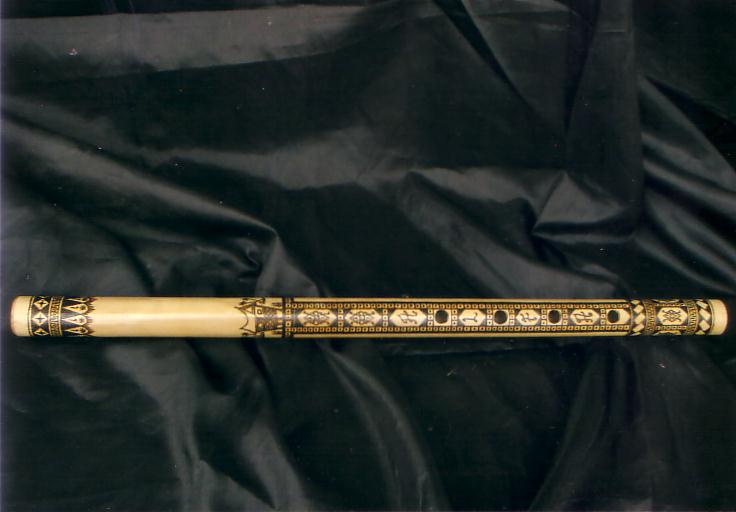
Salang is a musical instrument traditional Minangkabau people of West Sumatra. Musical instrument is a wind instrument similar to flute musical instruments, but more modest manufacturing by punching holes in a thin bamboo or commonly referred to by the Minang the gutter as much as 4 holes.
Sasando

Sasando is a traditional musical instrument which comes from Rote island of Nusa Tenggara Timur. Sasando itself comes from the word Sari (picking) and Sando (vibration) which when combined have the meaning vibrate when plucked. Sasando played with two hands from the opposite direction, left to right and right to left. The left hand plays the melody and bass, while the right hand plays accord.

Sampek

Sampek is a traditional musical instrument from Borneo, commonly used by the Dayak tribe. This instrument is made from various types of wood. However, the most commonly used materials are wood arrow, lime wood, and ironwood and are traditionally made. Making process could take weeks and weeks. Made with 3 strings, 4 strings and 6 strings. Sampek usually be engraved in accordance with the wishes of the maker.

Talempong

Talempong is a traditional musical instrument which comes from the Minangkabau, West Sumatra. These instruments are included in the percussion instruments like gamelan in Java. Even the shape was also almost the same as the gamelan. Currently available in the community Talempong mostly made of brass although there is also Talempong made of wood and stone. Talempong usually circular with a diameter of 15 to 17.5 inches, there is a hole on the bottom whereas on the top there is a prominent traffic circle five inches in diameter as a place to hit.

Tambo

Tambo is a musical instrument that originated from Aceh. How to use this tool just like Tambour is by way of being hit. Formerly a traditional tool is used as a sign upon entering the fard prayer times.

Triton

Triton is an instrument that is blown way is to use. Traditional musical instruments are from Papua. This instrument is scattered on the coast in Papua and was used as a communication tool and as a call to others.

Traditional Music Instrument Tifa

Tifa traditional musical instruments including percussion type. Tifa made from a piece of wood that its contents removed and the edges covered one side, and usually cover used deer skin that has been dried to produce a good sound and beautiful.

Trumpet Reog


Reog trumpet is a traditional musical instrument which comes from the Ponorogo, East Java. This instrument is commonly used as a companion when the show Reog Ponorogo. This instrument is included in this type of wind instrument.

Sequence

| comments

There are different kinds of sequences that we can practice and memorize. This is very useful later for improvisation and even to play the melody.
For this page, I will always update to the latest sequence. All of the following sequences were trained with a slow tempo first, then start accelerating. One thing to keep in mind that "Speed is important but not absolute". Then trained in ascending (up) and descending (down). Learn one by one from each point below. Once memorized and then proceed to the next point
Let's get started...

1-2 - 3 - 4-5 - 6 - 7-1
Do - re - mi - fa - sol - la - he - do

123 (do, re, mi) - 234 (re, mi, fa) - 345 (mi, fa, sol) - 456 (fa, sol, la) - 567 (sol, la, si) - ff.

1234 (do, re, mi, fa) - 2345 (re, mi, fa, sol) - 3456 (mi, fa, sol, la) - 4567 (fa, sol, la, si) - ff.

13 (do, mi) - 24 (re, fa) - 35 (mi, sol) - 46 (fa, la) - 57 (sol, si) - ff.

21 (re, do) - 32 (mi, re) - 43 (fa, mi) - 54 (sol, fa) - 65 (la, sol) - ff.

16 (do, la) - 27 (re, si) - 31 (mi, do) - 42 (p, re) - 53 (sol, mi) - 64 (la, fa) - ff.

67 (la, si) - 56 (sol, la) - 45 (fa, sol) - 34 (mi, fa) - 23 (re, mi) - 12 (do, re) - ff.

123 (do, re, mi) - 1234 (do, re, mi, fa) - 234 (re, mi, fa) - 2345 (re, mi, fa, sol) - ff.

12 343 (do, re, mi, fa, mi) - 23 454 (re, mi, fa, sol, fa) - 34 565 (mi, fa, sol, la, sol) - ff.

321 (mi, re, do) - 432 (fa, mi, re) - 543 (sol, fa, mi) - 654 (la, sol, fa) - 765 (si, la, sol) - ff.

4321 (fa, mi, re, do) - 5432 (sol, fa, mi, re) - 6543 (la, sol, fa, mi) - 7654 (si, la, sol, fa) - ff.

671 (la, si, do) - 567 (sol, la, si) - 456 (fa, sol, la) - 345 (mi, fa, sol) - 234 (re, mi, fa) - ff.

“Marcus Miller” Fender Jazz Bass

| comments

Fender Marcus Miller Jazz Bass is a signature of Marcus Miller who was a bass player known for his slap and groove. this bass body is made of ash wood. This bass can be active or passive bass.
For those fans of Fender Jazz Bass, certainly have ever felt the greatness of the bass. With a good, clear tone and neck with "C Shape", which greatly facilitates the bass player plays a bassline.. Here are the specs of this bass guitar.


SPECIFICATIONS:
  • Neck: "C" Shape
  • Number of Fret: 20
  • Fret Size: Medium Jumbo
  • Fret length: 86.36 cm
  • Nut Width: 38.1 mm
  • Headstock: Artist Signature
  • Truss Rod Nut: Bullet Style
  • Pickup Bridge: Vintage Jazz Bass ® Single-Coil Pickup (Bridge)
  • Neck Pickup: Vintage '75 Jazz Bass ® Single-Coil Neck Pickup
  • Control: Volume 1. (Neck Pickup), Volume 2. (Bridge Pickup), Tone 1. Active Bass Boost / Cut, Tone 2.
  • TrebleBoost / Cut
  • Bridge: Leo Quan Badass ® II
  • String Nut: Synthetic Bone
  • Pick Up Cover: Chrome Pick Up Cover
  • Switching: Active / Passive Mini Toggle Switch


Thus the specification of the Fender Marcus Miller Jazz Bass. this bass is worth to try and collected. we do not have much difficulty in setting equalizer  to get a good tone from this bass. These bass strings are available in 4 and 5 strings.

Knowing the Truss Rod function and how to adjust it.

| comments

If we really love Bass Guitar, we must learn the knowledge of the Bass Guitar. One of them will be discussed are the various Truss Rod and how to adjust it. Often we find a crooked neck. Crooked neck can be caused by various factors. Due to the weather, the wood can bend the neck, can also be caused due to a lack of good quality wood, which is easily bent due to the voltage of the string, the storage in the misplacement of Bass, etc... Truss Rod cannot be seen directly, because it is embedded in the timber neck. Function of the Truss Rod is to adjust the curvature of the neck. So if the neck does not fit the curvature, can be adjusted by Truss Rod. In order to more clearly we can see different types and shapes of the Truss Rod on the image below:


In a Bass Guitar, there is a hole to adjust the Truss Rod. There are hidden (usually covered with mica or plastic) and also there are visible. The location is also not the same. There are at the end of the neck to the head and some are at the end of the neck to the bridge. This adjustment can be done by one of the key "L" or also with a screwdriver. Depending on the type of Truss Rod itself. We can see in the image. 


To adjust the Truss Rod is advisable that loosen the strings first. Then Truss Rod set. If the neck feels convex then Truss Rod adjustment carried out in a clockwise direction. When the neck was concave then Truss Rod adjustment made against clockwise. This adjustment must be done carefully. Do it slowly, because it is usually to turn the truss rod is a bit harsh. Rotate a little and then left to stand for about 30 minutes, then the neck can be checked again the curvature (but previously tighten the strings should be first). Can be seen from the neck itself, nor seen from the distance between the strings to the freeboard. Can also be done with a special tool with a neck string gauge distance. When the felt has not been fitted, then the adjustment carried out again slowly. Repeat these steps until the neck to your taste.


Left Hand Technique (Bass / Guitar)

| comments

LEFT HAND TECHNIQUE

A. HAMMER ON (H)
This technique is played by the left finger tapping on the fret board, sounded the right index finger and then with the left hand first finger is still pressing on the fret board, the other left hand fingers hit the fret board (with a higher tone) without pronounced with right index finger.
The symbol of this technique is the "H".
Below is an exercise of the Hammer On.
--- | - 1 - | --- | - 3 - | --- | ---- strings 1
--- | - 1 - | --- | - 3 - | --- | ---- 2 strings
--- | - 1 - | --- | - 3 - | --- | ---- 3 strings
--- | - 1 - | --- | - 3 - | --- | ---- 4 strings
Train strings sequentially starting from 1 up to 4 strings. Then down again to the string 1. Train with a slow tempo first. Then the tempo is brought forward. How quickly the tempo of your day, try to even faster tomorrow. Here is a form of fingering can be trained:
1: finger
2: Central
3: Sweet
4: little finger
Training with a combination of finger:
1-2 2-3 3-4
1-3 2-4
1-4

2. PULL OFF (PO) 
This technique is the opposite of the Hammer On technique. Press the strings with fingers left: middle, or a little sweet (written with blue numbers). Then sounded, then the first left finger is lifted and the second left fingers press the strings with a lower tone is sounded again without the right index finger (written with red numbers).
--- | - 1 - | --- | - 3 - | --- | ---- strings 1
--- | - 1 - | --- | - 3 - | --- | ---- 2 strings
--- | - 1 - | --- | - 3 - | --- | ---- 3 strings
--- | - 1 - | --- | - 3 - | --- | ---- 4 strings
Practice with a combination finger on the left as exercises Hammer On.

3. HAMMER ATTACK (HA).
This technique is played by pressing a finger on the fret board with the left-enough energy to produce a tone is sounded by hand without the right. Train your fingers to combine your left until your left hand to feel quite tired.

4. HAMMER CROSS.
Use your left finger to press the fret board, then sounded the right index finger (written with blue numbers), then the second left finger ring the other strings with Hammer Attack techniques (written with red numbers).
--- | --- | --- | - 3 - | --- | ---- strings 1
--- | --- | --- | --- | --- | ---- 2 strings
--- | - 1 - | --- | --- | --- | ---- 3 strings
--- | --- | --- | --- | --- | ---- 4 strings
Train your fingers to combine, with different strings, and then try to run toward the chromatic bass body.

5. SLIDE (/ s)
This technique is used by the left finger pressing a note on the fret board, then sounded the right index finger, then the left finger (while still pressing the strings to the fret board) is shifted towards the body or toward the head in accordance with the intended tone.
--- | --- | --- | --- | --- | ---- Strings 1
--- | --- | --- | --- | --- | ---- 2 strings
--- | --- | --- | --- | --- | ---- 3 strings
--- | - 1 - | --- | - 3 - | --- | ---- 4 strings
======>
S

6. Vibrato
This technique is played with one finger to press the strings to the left of the fret board and sounded, then the string is bent vertically upward and down repeatedly with rapid. The resulting sound is the sound of the waves.

7. Vibrato SHAKE
This technique is played by the left fingers press the strings to the fret board and sounded, and finger plays slide techniques to the right out of the first fret then slide back into the first fret and then out to the left of the first fret. This process is done quickly and repeatedly. The technique is good when played solo with the Blues scale.

8. BEND
This technique is played by the left fingers press the strings to the fret board and sounded, then the finger to bend the strings to the head or toward the feet while holding down the strings. This technique is easier to do when the three left fingers press the strings are equal then bend them. Easier if done with the left thumb and three fingers gripping the neck press the strings are equal then bend them. The result is the first tone will rise to semitones or even whole tone.

9. Thrill
this technique is played by Hammer On technique and the technique alternately Pull Off quickly. Right index finger only once rang the strings. You must find the right moment to do this technique. The resulting sound is the voice fluctuates rapidly, giving rise to a wave effect.

10. Harmonic
the technique is done by attaching (without pressing) the strings at certain points on the fret board. In order to obtain a clearer harmonic sound, place your right hand closer to the bridge. The technique is much in use to tune- bass strings. Can also be played on a bass solo moments.

11. Barring
the technique is performed by pressing a few strings by using only one finger. (Usually combined with a double stop or raking techniques). This technique is useful to speed up the fingering in playing a bass line.

12. MUTE LEFT HAND
This technique is useful to stop the sound by placing the fourth finger of the left to the fret board without suppressing it, so just touch it.

13. GHOST NOTE LEFT HAND
The technique is performed by index finger across the three strings with the touch without pressure, then the third left finger slap to the four strings without producing a tone. A tone will create a tone that is just dead (dead note / ghost note).


Overcoming boredom While Drum Exercises

| comments (2)

One of the problems that will be faced by all the drummers are feeling tired during practice. In the early years, there are several reasons why we may feel bored.
First of all, exercise for beginners requires dedication because it is so elementary. In this level, maintaining the interest becomes a difficult thing. But students who successfully completed the first year of learning means have passed the toughest part. Hardest things to remain enthusiastic. Fortunately, for most of us, youthful passion and help us through the first part.

The next problem usually occurs when the student has developed enough to play the rudiment and basic pattern with a certain skill level. At this point, training and the same pattern can become very monotonous. Although repetition is important for the development of skills, strength, and control, this activity could also be negative. Repetition can be so boring, so loosen the student's determination and interest evaporate.
To overcome this, the student should be exposed to challenging material. Although there are parts that need to be trained many times, but the spirit can be maintained if we always have something new as training material. In this way, repetition of skills developed and mind constantly stimulated with new ideas and materials. This is a nice balance.

Tips to create a song

| comments (2)


These tips in creating a song
1) Make yourself into a variety of heart conditions. If you're sad, it will definitely create a sad song. Conversely, if you're happy is bound to create a happy song.
2) If you want to make love-themed songs, try, you've had experience in dating. It will facilitate you in finding a song would you make. Especially painful experience (betrayed or otherwise), must have seemed in the meaning of the song. You can also get inspiration from other people love stories, just waiting for your creativity.
3) Equally important is your mood at the time. Greatly affect the mood in the manufacture of the song .. If you're a bad mood, better do not always make the song. Guaranteed the song will sound less good.
4) At least have one instrument that can help you. But the most often used by people in general that is the guitar, there also are using the piano. Depending on your tastes and skills where you are.
5) try to sing with a melodious voice, diligent practice in order to have a good voice. If your voice in singing sounds bad, you usually tend to be lazy or hesitant to make the song because it is no longer confident with your ugly voice, and arise earlier assumption "I definitely could not afford".
6) Often rhythmic hum-free (but not too much) and spontaneously, because it could be the start you get the inspiration in finding the tone (arranger) song.
7) If you want to create a song, you definitely have to like the music first. Without it you will have difficulty in the process there will not even arise a sense of want to make the song.

Maybe just this once I can do to assist you in creating your music all its own. Keep the spirit, increase your creativity, and do not easily satisfy. Good luck and good luck ....

Learning Bassline Technique

| comments (1)


Bassline is one of bass technique that underlies the bass chord accompaniment and rhythm of a song.
Rhythm section is one part of the band (combo), which also determines the type rhythm / rhythm being played. They consist of drums, bass, piano / guitar. Piano / guitar also called chordal section.


Build BassLine
In building a bassline, played the most important notation is basic notes (root) of the chord itself. After that to support the basic notes, we can use the fifth tone of the base note, in this case are the tones 'Sol'. As an example we are playing in C major chord, then the basic notes are C, and fifth tones (sol) is G.
An example is like this:
C C F F
| C. G. | C. G. | F. C. | F. C. |
In the swing we would often play 4 tones with a value of ¼ in a bar like form below :
C C F F
| C C G G | C G C G | F C F C | F F C C |
Development of the above forms can be done in the following way:
1. Approach Trinada
Trinada or so-called Triad of a chord is the tone that the builders of a chord. Tone (in major and minor) consists of:
• 1 (do) as root / basic tone of the chord.
• 3 (mi) if the major and 3b (ri) if the minor, as third tone/3rd or determining the nature of the chord if the chord is major or minor.
• 5 (sol) as the fifth tone of the chord.
For example, the form becomes as follows:
C F C F
| C E G C | F A C F | C E G C | F A C F |
2. Arpeggio approach and Broken Chords
Arpeggio is a tone which consists of a chord in which the tone is played individually or sequentially. Named Broken Chords if played in no particular order.
In addition there are arpeggios trinada describing the tone of the extension or the quality of the chord so that explains the full chord.
For example in the C7 chord arpeggios it is 1      -     3      -   5   -     7 b    .
From the example above can build a pattern bassline, one of them is as follows:
C F C F
| C E G Bb | F A C Eb | C E G Bb | F A C Eb |
3. Approach with semitones
Semitones or so-called half tone / tone that have a ½ intervals.
To my menus to the next chord we may also use or combine movements * chromatic chord towards the goal.
For example, combines with the movement of Chromatic Triads are as follows:
C F C F
| C E G Gb | F A C (B) | C E G Gb | F A C (B) |
Semitones
4. Interval Bassline (General Form)
In progress displacement chord in swing bassline commonly used form of intervals as follows:
Major = WHH (Whole - Half - Half) or intervals of 1 - ½ - ½.
Minor = WHHH (Whole - Half - Half - Half) or intervals of 1 - ½ - ½ - ½.
For example there are the following forms:
C F A-D-
| C D D # E | F / / / | | A B C C # | D E F F # |

From the above theory, let us try to apply the 12 Bar Blues Swing Progress in C.
Here's the form:
| C7 / / / | F7 / / / | C7 / / / |% / / / |
| F7 / / / |% / / / | C7 / / / | E-7 / A-7 / |
| D-7 / / / | G7 / / / | C7 / A-7 / | D-7 / G7 / |

^ ^ Good luck ^ ^


Tips for a successful singing

| comments


It turned out good sound cannot guarantee spectators welcome. So, how to be successful singing in public?
- Prior to sing in public, there are some things you should be prepared. The goal is that we can look more leverage and sleeker look. Whatever you have prepared?

1. Create a balanced arrangement of the song. Prepare a song with a flowing arrangement. Which allows the appearance we can reach a climax.
2. In making the order, the mood should also be considered. Remember, it's better directing the audience on a clear mood, rather than playing their mood without a definite purpose.
3. Prepare the theme of our appearance in accordance with the conditions of the audience. For example, if we gig in front of the soldiers, shouted jokes as well if we prepare a typical soldier, so the atmosphere is intimate.
4. It must be remembered, even if we play to the audience, we also have to please ourselves. Because, with a relaxed appearance, our audience will enjoy the action stage
5. Try to prepare something that is dramatic in between songs. For example, prepare heartwarming words about the song that will be sung.

- There are a few things about the venue that will affect our appearance during a gig. Therefore, venue to be one important component that must be considered.
1. As long as possible, try to go the venue where the concert was held before the event. Consider every angle carefully.
2. Try walking from the backstage area to the microphone stand. Then, walk to each end of the stage. In this way, we can recall the distance that we traveled. So that our movement can be adjusted with the lyrics sung.
3. Try singing out loud for investigating accousticity building. Who knows, we do not have time for rehearsal. So, we can know how the reflection room where we sing.
4. Find out where the next position that allows the audience to see clearly in our direction. Find out also his blind spot area. So that we can avoid being in that area.
5. To investigate the steps above, we need to be accompanied by a friend. So that he can give us feedback on the investigation.
6. Make sure we have a space that fit to perform.

- Remember, clothing is used when a gig is also worth noting!
1. Prepare clothes that fit and in accordance with the venue and the audience in attendance at concerts
2. Note the color of the stage. Do not wear clothes that disguise our presence on the stage (e.g. using a red dress but also the stage curtain in red). Use flashy clothes, which make our existence on the stage clearly visible.

TIPS
That must be kept in mind before the concert is, whether we are a professional or amateur singers, we have to set an intention to appear successful. The trick is to enjoy all the experiences that we can from the stage. And, do our best.

Tapping Electric Guitar technique

| comments

Various ways of playing the guitar, either acoustic or electric guitar. Not long ago young musicians Indonesia look stunning with his guitar.

Playing acoustic guitar can be done in ways such common Flamenco, Pop and Classic. Not much different to play on electric guitar.

The difference in electric guitars, guitar sound should wear additional noise amplifier (amplifier). Because the electric guitar does not have space to accommodate the acoustic resonance Stringed (string) guitar.

How to play guitar with style "Tapping" is, Stringed not picked as usual, but a knock Stringed use your fingers directly. On the electric guitar is very sensitive to touch on Stringed.

From the sensitivity Stringed that thrill "spool" electrically, making it more attractive tapping technique on the use of electric guitars. Is the acoustic guitar can also be done this way? Yes, acoustic guitar could just not as loud (loud) on electric guitar.


World-class guitarist who often plays guitar with Tapping attractions there include the name Eddie Van Hallen, Steve Vai, Paul Gilbert, Andy James and Balawan of Indonesia'spioneer style tapping in Indonesia.

To see how this musician plays his guitar can be seen in YouTube, Google, Yahoo and MSN to write the word "Tapping Guitar"

That my friend, with my fingers do not normally post-surgery forced me to re-learn to play guitar with tapping this way. For the same pal who is interested or concerned with this guitar technique... Let us share.
 
Support : Creating Website | Johny Template | Mas Template
Copyright © 2011. Free Music Lessons - All About Music - All Rights Reserved
Template Created by Creating Website Published by Mas Template
Proudly powered by Premium Blogger Template